The Loom, The Car & the Modern Data Engine
-
 By
Dr. Joe Perez
, Senior Systems Specialist / Team Leader at NC Department of Health and Human Services
- Best Practices,
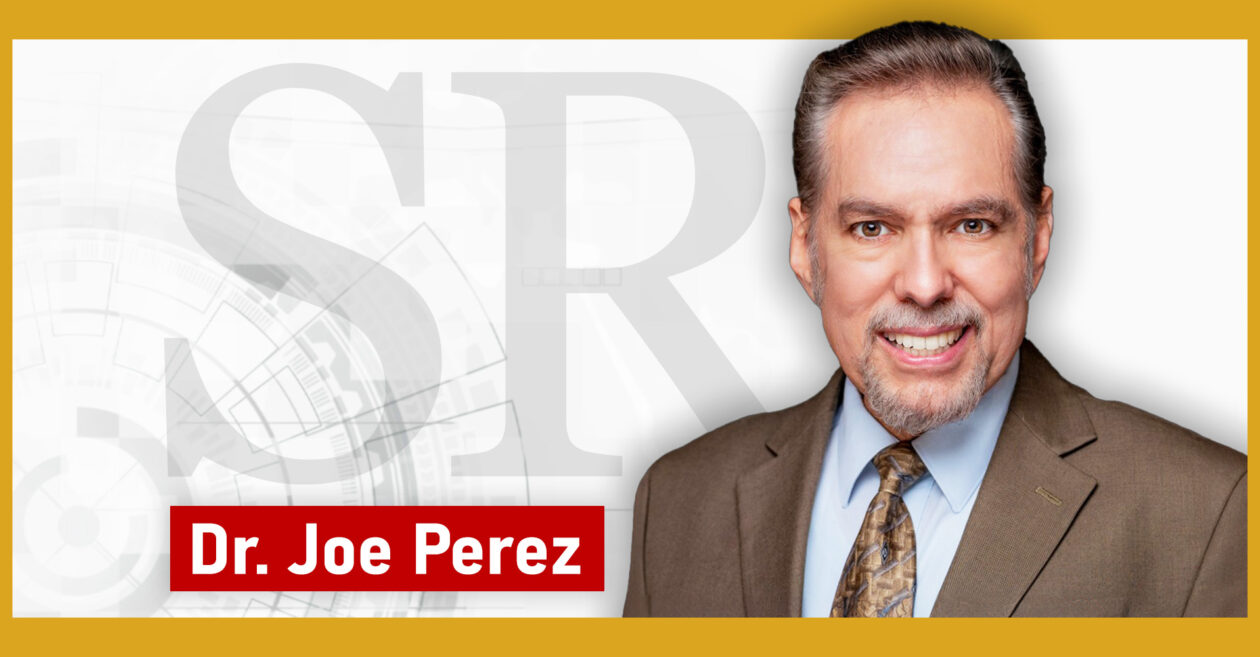
 Dr. Joe Perez offers expert insights on the loom, the car, and the modern data engine. Solutions Review‘s Expert Network is an enterprise tech publishing platform where thought leaders turn real-world authority into visibility and authority.
Imagine standing on a bustling factory floor in Nagoya, Japan, in the year 1926. The air is thick with the rhythmic, deafening clatter of hundreds of textile machines. In the center of this industrial symphony stands an inventor named Sakichi Toyoda, watching his masterpiece at work: the Type G Automatic Loom. For decades, Toyoda had been obsessed with making a better weaving machine. His latest invention was a marvel of the age. It could change out yarn shuttles automatically without stopping for a single second, allowing a single worker to operate up to fifty looms at the same time.
But Sakichi’s greatest breakthrough was a small, almost invisible mechanism built into the machine. If a single warp thread snapped, the loom instantly stopped itself. This prevented the machine from churning out defective, ruined cloth. Sakichi called this concept Jidoka, or automation with a human touch. It was a brilliant philosophy: never let a mistake compound into a catastrophe.

Within a decade, this entire weaving empire would radically change direction. Sakichi’s son, Kiichiro Toyoda, looked at the world in the 1930s and realized that the future belonged to the automobile. Armed with the money from selling the patent rights of their automatic loom to a British company, Kiichiro did something incredibly bold. He pivoted. He set up an automotive division right inside the loom factory. The workers used the exact same precision casting and mechanical engineering skills they had perfected while building weaving machines to start reverse engineering car engines. By 1937, the car division split off into an independent company. They even altered the name slightly from Toyoda to Toyota, because writing Toyota in Japanese katakana requires exactly eight brush strokes, a number representing prosperity and good fortune.

Fast forward to today, at the base of Mount Fuji, where Toyota is building Woven City. It is a futuristic, living laboratory powered by hydrogen fuel cells and filled with autonomous vehicles, robotics, and smart homes. The name is a direct, deliberate tribute to their origins. They are no longer weaving fabric, but they are weaving together three distinct types of roads: fast mobility lanes, lower speed personal scooter paths, and quiet pedestrian promenades.
As a data professional who has spent decades helping organizations untangle their messy systems, I find this history utterly captivating. The story of Toyota is not just a great piece of business trivia. It is the ultimate blueprint for how we should be thinking about modern data management and data governance.
Too many companies treat their data like an old, manual loom. They let raw information pour into their systems at blistering speeds, hoping that sheer volume will translate into value. But without the right frameworks, the threads snap, the data corrupts, and the organization ends up with a tangled mess of unusable information. If we want to build a data ecosystem that can survive the age of artificial intelligence, we must learn how to weave and how to pivot just like Toyota did.
The Broken Thread: Implementing Jidoka in Data Governance
Let us start with Sakichi’s concept of Jidoka, the machine that stops when a thread breaks. In the world of corporate data, threads snap constantly. A vendor changes an address format in an upstream application, a sales rep leaves a critical field blank in the customer relationship management system, or an automated script glitches and duplicates ten thousand financial records.
In a traditional data environment, nobody notices these broken threads until it is far too late. The corrupted data travels down the assembly line, flows into the data warehouse, enters the executive dashboard, and ultimately informs a terrible strategic decision. By the time the mistake is discovered, weeks have passed, and data analysts must spend days playing digital detective to find out where things went wrong.
True data governance should act exactly like Sakichi’s automatic loom. We need to build automated data quality checks right into the entry points of our pipelines. If a data stream fails a validation rule, the system should halt that specific record or stream immediately.
In your everyday workplace, this looks like real-time validation. For instance, if an e-commerce platform receives an order with a negative transaction value, the system should quarantine that data point instantly and alert the engineering team. By stopping the line the moment a data thread snaps, you protect the purity of your entire data lake. You prevent bad data from polluting your downstream analytics, saving your team countless hours of frustrating cleanup work.
Weaving the Grids: The Power of Multi-Speed Data Architecture
When Toyota designed Woven City, they realized that putting a high-speed autonomous delivery truck on the exact same pavement as a parent pushing a stroller is a recipe for disaster. Different types of movement require different environments. Yet, in the corporate world, we constantly dump all our data into one massive, unstructured bucket and expect everyone to navigate it safely.

Your data strategy needs a woven architecture that mirrors the streets of Woven City. Think of your organization’s data as having different mobility lanes:
-
The Fast Mobility Lane: This is your real-time, streaming data. It includes live website clickstreams, credit card fraud detection feeds, and IoT sensor logs from your machinery. This lane requires high automation, strict API controls, and immense processing power.
-
The Mixed Mobility Lane: This is the space for your operational databases, daily financial rollups, and customer master data. It moves at a steady, controlled pace, accessed by business analysts and department heads who need reliable, verified numbers to run weekly reports.
-
The Pedestrian Promenade: This is your sandboxed exploratory environment. It is a safe, quiet space where data scientists and curious employees can play with data sets, build experimental models, and look for hidden trends without any risk of knocking over a production system or violating a privacy regulation.
-
The Underground Logistics Network: This represents your backend master data management and metadata catalogs. It is invisible to the average business user, running quietly beneath the surface to move data securely between systems, handle archiving, and manage compliance tracking.
When you categorize and separate your data streams based on their speed and utility, you eliminate friction. The data scientists do not clog up the operational databases, and the executive team does not get overwhelmed by raw, chaotic streaming data. Everyone gets the lane they need to move safely.
The Great Name Change: Mastering the Data Pivot
Kiichiro Toyoda’s pivot from looms to cars required an extraordinary amount of agility. He had to evaluate his company’s core strengths, casting aside the specific product of fabric while keeping the underlying discipline of precision manufacturing. Later, the company even changed its name to align with a cultural symbol of luck and efficiency.
Organizations today must be prepared to execute similar pivots with their data strategies. A rigid data strategy is a dying data strategy. Technologies shift, business goals evolve, and data regulations change overnight.
Consider how many companies built massive on-premise data centers ten years ago, only to realize they needed to migrate everything to the cloud to stay competitive. Think about how the sudden rise of strict privacy laws like GDPR and CCPA forced businesses to completely change how they collect and store customer identifiers.
A successful data leader knows how to pivot without destroying the foundation. If your company decides to shift its business model from selling physical products to offering a subscription software service, your data infrastructure must adapt seamlessly. You must be able to retool your customer data models, alter your revenue tracking pipelines, and train your staff on new metrics without dropping a single beat. It requires a culture that views data models as flexible living structures rather than permanent monuments etched in stone.
Conclusion: Bringing the Threads Together
Building this kind of adaptive, woven data ecosystem requires a major cultural shift. It means moving away from viewing data governance as a bureaucratic department that merely says no to every request. Instead, data governance must become the ultimate enabler, designing the very roads that allow information to travel safely and swiftly across the enterprise.
To make this practical in your day-to-day work life, start small. Look for one broken thread in your current department. Find that one manual spreadsheet everyone complains about, or that one data entry error that keeps happening every Tuesday morning. Fix that single thread by introducing an automated check. Next, look at how people access your data. Are your business users accidentally wandering into the high-speed lane and getting overwhelmed by technical jargon? Build them a pedestrian promenade, a simple, clean dashboard where they can find exactly what they need without getting hurt.
When we look back at the history of Toyota, the journey feels almost miraculous. How does a company go from spinning cotton threads in a rural Japanese town to building autonomous cities at the base of Mount Fuji? The secret lies in the fact that they never actually abandoned their origin story. They simply scaled it.

The very same engineering spirit that Sakichi Toyoda used to align individual threads of cotton yarn on a wooden loom is the exact same spirit his descendants are using today to align autonomous vehicles on the digital streets of Woven City. They proved that if you master the art of the perfect weave, and if you have the courage to pivot when the world changes, you can manufacture a legacy that lasts forever. It is time for us to take that exact same loom, step up to our corporate data platforms, and start weaving our own future.
Dr. Joe Perez
Senior Systems Specialist / Team Leader
Dr. Joe Perez, award-winning thought-leader, prolific international keynote speaker, and Amazon best-selling author with 40+ years in IT/education, has amassed an impressive portfolio. From Business Intelligence Specialist to Senior Systems Specialist and fractional CTO, he's an authority in data viz/analytics and process improvement. Featured on multiple Times Square billboards, he's a powerhouse of expertise, integrity, and excellence. Recognized as a LinkedIn Top Voice with 20,000+ LinkedIn followers, Perez sparks innovation, captivating audiences at conferences across the globe.