

Mirror, Mirror on My Screen, What’s a Human Meant to Be?
-
 By
Derek Rydall
, Owner at Emerging Edge Media
By
Derek Rydall
, Owner at Emerging Edge Media - Best Practices,

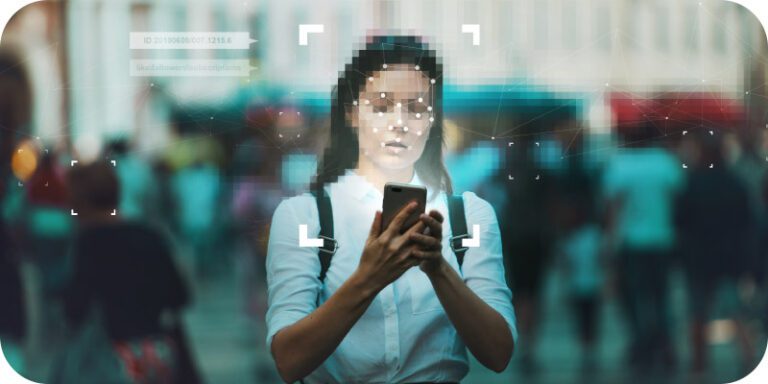
Derek Rydall, bestselling author and consultant, recently shared some commentary on how technologies like AI are “mirrors” that reflect what we give to them. This article originally appeared in Insight Jam, an enterprise IT community that enables human conversation on AI.
 Since the dawn of civilization, humans have been searching for mirrors. Not just reflective surfaces, but tools that promise to show us who we really are and amplify our power. And every age tells the same cautionary story: the problem has never been the mirror itself. It’s been what we tried to amplify before we understood ourselves.
That’s why one of the first great mirrors in Western civilization wasn’t a machine at all, but a warning. The Oracle of Delphi. And her reflection was uncompromising and straightforward: Know thyself.
Until we do, we’re always at risk of using outer technologies to amplify forces we cannot control and, eventually, become controlled by them—becoming the tool instead of the user, the product instead of the consumer.
The Real Alignment Problem
This is why the real alignment problem isn’t AI. It’s us.
AI is a mirror. But what we see in it depends not just on who is looking, but where we’re looking from. Our history. Our identity. Our map of reality. The filters of conditioning, incentive, fear, and desire. Much of which was never consciously chosen. Without understanding those filters, we don’t really know what we’re looking for. And when we finally see something, we often don’t know what we’re actually looking at.
As I write in A Whole New Human, we didn’t evolve to see reality as it is; we evolved to see what helped us survive. We don’t see the world objectively, and we don’t even see ourselves clearly. We see through our beliefs, our patterns, and our programs.
This matters now more than ever, because AI governance begins with self-governance. The ROI of self-knowledge in AI implementation isn’t just about soft skills development; it’s the difference between systems that amplify our examined intentions versus those that amplify our unconscious patterns.
Earlier technologies could only do what we did through them. AI is different. This is the first technology that doesn’t just extend intelligence but can generate and scale it without direct human input. Left unconscious, it won’t amplify what’s best in us. It will amplify what’s most common. Survival. Status. Power. The pursuit of name, fame, and fortune…without the wisdom to sustain them.
We’ve already lived through a version of this with social media, where technologies designed to connect us ended up amplifying anxiety, tribalism, addiction, and outrage. Not because the tools were evil, but because they scaled the unexamined survival drives beneath them.
From Amplifier to Replacement
We can already see the early signs of AI. When was the last time you did math manually, or drove somewhere beyond your neighborhood with no GPS? Could you still write a clear, original argument without assistance? These conveniences seem harmless, even helpful. But with every new technology, we gain rewards while quietly outsourcing parts of ourselves.
Like the proverbial frog in boiling water, we don’t notice the cost until we’ve lost capacities we once took for granted. But this is not a prophecy of doom. It’s a fork in the road.
Used unconsciously, AI can make us faster, more productive, even wealthier, while slowly eroding agency, depth, and self-trust. Used intentionally, it can become one of the most powerful mirrors we’ve ever had for waking up to what’s actually running our lives and, by extension, our businesses.
AI’s pattern-recognition ability can expose where we’re stuck in survival mode, where fear is driving decisions, where outdated programs are shaping our work, leadership, and relationships. Used this way, it doesn’t replace human intelligence. It sharpens it and helps us remember our original source code.
Humans as the New Moat
We are the true superintelligence. In a world where AI can replicate human capability, self-governed, self-reflective humans become the new competitive moat—the killer app business will need in the very near future. In an AI-saturated world, the scarcest resource won’t be intelligence; it will be judgment.
Steve Jobs wasn’t really selling phones. He was selling an instrument to express more of who we are. To “think different.” Oprah didn’t use television just to broadcast a show, but to amplify a message of authenticity at scale. The most powerful technologies have continually succeeded when they helped humans become more themselves, not less.
The companies and leaders who will thrive aren’t those merely with the most AI; they’re those who’ve done the hardest work of knowing what they’re actually optimizing for. And when everything has become a commodity, the only thing left to optimize will be our humanity.
The secret to real success has never been in what we achieve, but in what we become. Not in how many possessions we have, but in how much of ourselves we possess. We’re not here merely to make changes. We’re here to be the change.
Mirror, mirror on the screen, what’s a human meant to be?
Why not ask your AI that question? And then keep asking. Because true amplification doesn’t come from better answers, but from deeper questions. And learning to ask better questions may turn out to be the most important intelligence we ever develop.

Derek Rydall
Owner
Derek Rydall is a bestselling author, prominent life coach, consultant for Emmy and Academy Award winners, Fortune 500 executives, and leaders in business, spirituality, and the healing arts. He is an active speaker, bringing his unique brand of inspiration to audiences around the world, and he writes for HuffPost and Spirituality & Health, among others.


