From Breakfast Bliss to Data-Driven Diplomacy with Pop-Tarts
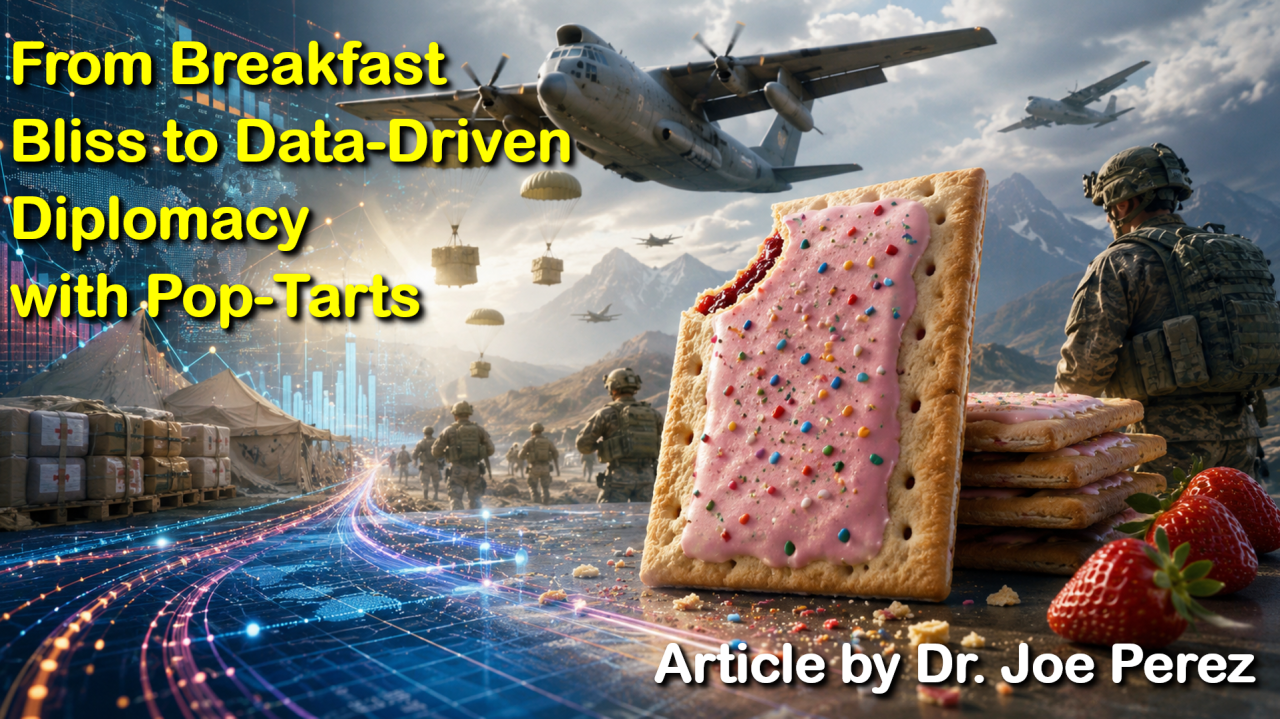
William “Bill” Post, the genius behind the iconic Pop-Tart, left behind a legacy that goes far beyond breakfast tables when he passed away on Feb. 10, 2024, at age 96. Post, an Army Air Forces veteran who served in occupied Japan after World War II, may not have worked for the Post cereal company, but he certainly outshined their efforts. While his military service is commendable, it’s his creation of the Pop-Tart that continues to resonate across generations. What makes this story even more fascinating is not just the sugary treat itself, but the strategic, innovative ways it has been used, both in military operations and as a case study in the power of data analytics.
Far beyond a mere nostalgic snack, Pop-Tarts represent a profound intersection between clever marketing, military ingenuity, and the transformative role of data-driven insights. From their inception as a calculated response to a competitor’s misstep to their deployment in humanitarian aid and military negotiation efforts, Pop-Tarts underscore how data and strategy can shape outcomes in unexpected ways. This article dives into the sweet and surprising history of Pop-Tarts, while also exploring two key lessons in data analytics that emerge from their story. Spoiler alert: the humble toaster pastry has a lot to teach us about patterns, precision, problem-solving, and adaptability.
The Rise of Pop-Tarts (A Strategic Move Fueled by Market Data)
Back in 1964, Kellogg’s Pop-Tarts burst onto the scene after rival Post announced their own “Country Squares,” a similar fruit-filled breakfast pastry. But Post’s critical mistake, that of delaying the product launch, allowed Kellogg’s to analyze the competitive landscape and craft a strategic response. By leveraging available market data, Kellogg’s not only fine-tuned their product but also tapped into cultural trends, naming their creation “Pop-Tarts” as a clever nod to the “pop art” movement spearheaded by Andy Warhol. The result? An instant hit that left Post’s Country Squares forgotten in the dust.
This moment is a classic example of data-informed decision-making. Kellogg’s ability to analyze their competitor’s delay, assess consumer preferences, and capitalize on cultural momentum highlights the importance of using data to make agile, informed choices. Rather than creating a product, they created a phenomenon by aligning their strategy with emerging trends and consumer desires. This underscores how businesses can harness data analytics to outmaneuver competitors and secure their place in the market.
Fast-forward to today, and the impact of that data-driven decision still reverberates. Kellogg’s, now through its spin-off Kellanova, produces over 3 billion Pop-Tarts annually. The lesson here is clear: understanding your audience and acting on real-time data can transform a simple idea into a global sensation. Success depends on more than just the product. Factors like timing, context, execution, and adaptability all play crucial roles, each grounded in the ability to interpret and act on data.
Pop-Tarts and Military Strategy (The Role of Humanitarian Data)
The Pop-Tart’s story doesn’t end at breakfast tables. Its role in U.S. military efforts, particularly in humanitarian aid and negotiations, offers another profound connection to data analytics. Take, for instance, the 2001 airstrikes in Afghanistan. Amid a dire humanitarian crisis, with six million Afghans facing hunger following decades of conflict, the U.S. military dropped millions of bright yellow humanitarian ration packets. Among these were none other than Pop-Tarts, strategically included as an “icebreaker” to introduce Afghan civilians to American food.
Rather than being random, the decision to include Pop-Tarts was informed by data on caloric needs, cultural considerations, and logistical constraints. Shelf-stable, lightweight, calorie-dense, and easy to distribute, Pop-Tarts were a perfect fit for the operation. This highlights how data-driven humanitarian efforts can make a tangible difference. Analyzing factors like food stability, ease of distribution, and recipient preferences enabled the military to optimize its food aid strategy and maximize impact under challenging conditions.
This use of data analytics extended beyond logistics and into the psychological realm. The Pop-Tarts, as familiar and non-threatening symbols of American culture, served to bridge cultural divides and build trust. It’s a testament to how data can inform not just practical decisions, but also strategic messaging in complex environments. Whether in marketing or military strategy, understanding the human element through data is crucial to achieving meaningful outcomes.
The Sweet Spot (Where Data Meets Strategy)
The Pop-Tart phenomenon is a masterclass in how data analytics can drive success in both commercial and military contexts. From Kellogg’s strategic market entry to the U.S. military’s tactical use of toaster pastries in Afghanistan, this story illustrates the power of leveraging data to solve problems, inspire innovation, connect with people, and achieve meaningful objectives. These lessons are as relevant today as they were in 1964, proving that even the simplest products can carry profound implications when paired with the right insights.
Conclusion (Beyond the Breakfast Table)
For U.S. military personnel deployed overseas, Pop-Tarts remain a staple of morale and sustenance. Troops often find “toaster pastries” in their MREs, available in flavors like frosted brown sugar cinnamon and chocolate chip. Intriguingly, many service members claim MRE Pop-Tarts taste better than their store-bought counterparts, though the reason remains unclear. But the story of Pop-Tarts goes beyond their flavor, encompassing their journey from a clever marketing ploy to an essential component of military strategy.
Reflecting on this journey, we see how data analytics has been the unsung hero in the Pop-Tart’s success story. From Kellogg’s initial market analysis to the military’s calculated use of the product in humanitarian aid, data has shaped every step of the process. This highlights a broader truth: in today’s world, the ability to gather, interpret, and act on data is more than a competitive advantage; it has become an essential necessity.
Pop-Tarts remind us of the surprising ways data can influence outcomes. They started as a breakfast innovation, but through strategic thinking and data-driven decisions, they’ve become a symbol of cultural connection, military ingenuity, diplomatic outreach, and enduring influence. Whether you’re crafting a marketing strategy, planning a humanitarian mission, or simply grabbing a quick snack, the lessons from this story are clear: data matters, and its impact can be as profound as it is unexpected.
So, the next time you pop a Pop-Tart in the toaster or spot one in an MRE, remember: behind that frosted, fruit-filled rectangle lies a legacy of innovation, strategic thinking, cultural connection, and the undeniable sweet power of data.