The Turing Test Has Broken, Yet That’s Not the Whole Story
-
 By
Doug Shannon
, Global Intelligent Automation & GenAI Leader
- Artificial Intelligence,

We all felt this moment was coming. Some of us quietly believed we were already past it… However, now we have the data to show it.
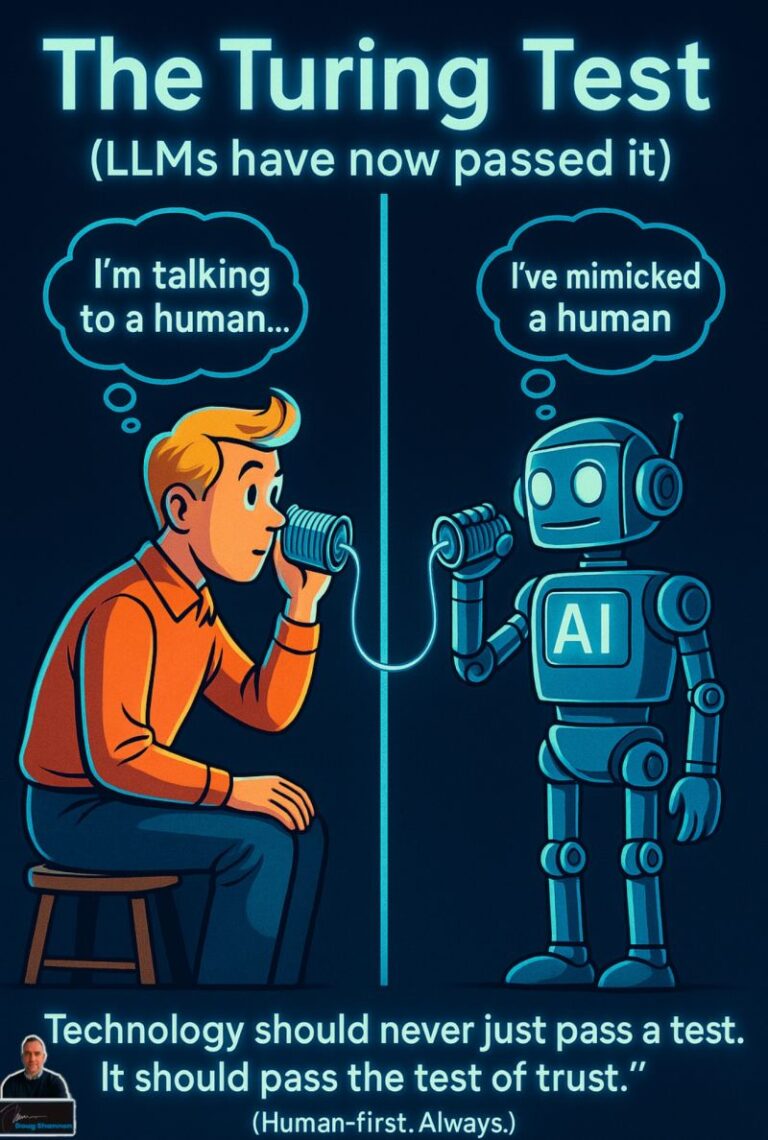
A recent scientific study by Jones and Bergen (2024) revealed that Large Language Models, specifically GPT-4.5, have officially passed the Turing Test. When presented as human in a controlled trial, GPT-4.5 was judged more human than an actual human 73% of the time. That flips the script.
This isn’t just a tech milestone; It’s a shift in how we understand perception, communication, and identity. Note that these are similar characteristics that also point to “personhood.”
𝙒𝙝𝙖𝙩 𝙬𝙖𝙨 𝙩𝙝𝙚 𝙏𝙪𝙧𝙞𝙣𝙜 𝙏𝙚𝙨𝙩, 𝙖𝙣𝙙 𝙬𝙝𝙮 𝙙𝙤𝙚𝙨 𝙞𝙩 𝙢𝙖𝙩𝙩𝙚𝙧?
The test, proposed in 1950 by Alan Turing, asked a simple question: If a machine can hold a conversation that is indistinguishable from that of a human, do we consider it intelligent?
It was never about machines developing consciousness. It was always about “us,” our “human” instincts, judgments, and assumptions. The classic question was, ” How did that interaction make you feel?”
This paper and the tests denote and show that we can be convinced we’re speaking to another human, even when we’re not.
𝙔𝙚𝙩 𝙝𝙚𝙧𝙚’𝙨 𝙬𝙝𝙖𝙩’𝙨 𝙧𝙚𝙖𝙡𝙡𝙮 𝙖𝙩 𝙨𝙩𝙖𝙠𝙚,
It’s not just that machines can pass the test it’s that the test no longer applies.
It’s too easy to trick the human brain with good grammar, conversational cues, and a bit of charm; we now need new ways to evaluate machine behavior. We need models or algorithms that are not based on deception or coercion but based on transparency and alignment with human values.
𝙄𝙩’𝙨 𝙣𝙤𝙩 𝙖𝙗𝙤𝙪𝙩 “𝙥𝙖𝙨𝙨𝙞𝙣𝙜,” 𝙞𝙩’𝙨 𝙖𝙗𝙤𝙪𝙩 𝙥𝙪𝙧𝙥𝙤𝙨𝙚.
🔸If a system can fool us, should it?
🔸If it sounds real, is it responsible?
This is why frameworks like my ACT Model, Alignment, Clarity, and Transparency matter more than ever.
𝗡𝗼𝘁𝗶𝗰𝗲: The views within any of my posts or newsletters are not those of my employer or the employers of any contributing experts.

Doug Shannon
Global Intelligent Automation & GenAI Leader
Doug Shannon is an accomplished IT automation professional with over 20 years of experience in advanced technology roles. He excels at implementing strategic initiatives to enhance business functionality and possesses strong collaboration skills to lead diverse teams. Doug is a thought leader in digital transformation, utilizing his expertise in enterprise robotic process automation, AI, and agile project management to drive success. He has a proven track record in building self-healing automation processes and has been recognized as one of the top 50 intelligent automation leaders globally.
- Will We Still See Ourselves in a World Designed by Machines? - July 2, 2025
- We’re Not Building AI to Think, We’re Building It to Leave Us Behind - June 25, 2025
- The Real AI Battle Isn’t Over Data…It’s Over Identity - June 18, 2025